FIFA EA Sports: The Ultimate Digital Football Revolution 🎮⚽
From pixelated players to photorealistic athletes, FIFA EA Sports has evolved into more than just a game—it's a global phenomenon that bridges the gap between virtual and real football. This comprehensive guide explores every facet of the world's premier football simulation.
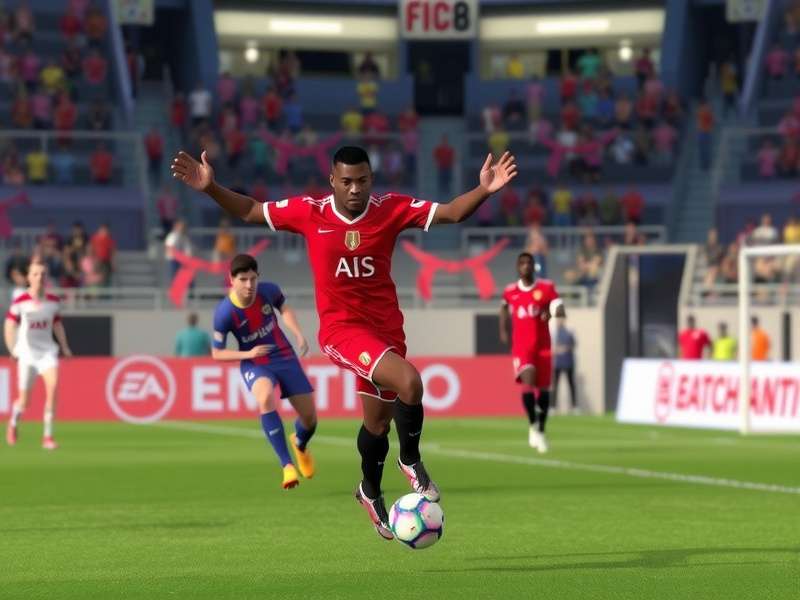
🏆 The FIFA EA Sports Legacy: A Historical Overview
When EA Sports launched the first FIFA International Soccer in 1993, few could have predicted it would evolve into a cultural titan. The franchise has sold over 325 million copies worldwide, making it the best-selling sports video game franchise in history. What began as a simple isometric football simulation has transformed into a complex ecosystem encompassing multiple platforms, game modes, and competitive scenes.
💡 Did You Know? The original FIFA game featured only national teams and was praised for its realistic ball physics—a revolutionary feature at the time that set it apart from competitors like Sensible Soccer.
The franchise's success stems from EA Sports' relentless pursuit of authenticity. From securing exclusive licensing agreements with major leagues like the Premier League, La Liga, and Bundesliga to implementing cutting-edge motion capture technology featuring real footballers, FIFA has consistently pushed the boundaries of what's possible in sports simulation.
The Licensing Advantage
One of FIFA's most significant competitive advantages has been its extensive licensing portfolio. With over 17,000 players, 700 teams, 100 stadiums, and 30 leagues officially licensed, the game offers an authenticity unmatched by competitors. This comprehensive licensing extends beyond just names and kits—it includes player likenesses, celebrations, and even managerial styles.
Recent years have seen the franchise expand its licensing to include women's football, with the inclusion of the NWSL, Barclays FA Women's Super League, and Division 1 Féminine, marking a significant step toward gender inclusivity in sports gaming.
⚽ Gameplay Mechanics: The Engine Behind the Experience
At its core, FIFA's gameplay has evolved through multiple engine transitions—from custom-built engines to the current Frostbite engine implementation. Each iteration has brought significant improvements in physics, animation, and player responsiveness.
Hypermotion Technology: A Game-Changer
Introduced in FIFA 22, Hypermotion Technology represents the franchise's most significant gameplay leap in years. Utilizing machine learning and motion capture data from real 11v11 matches, the technology enables more realistic player movements, interactions, and decision-making. The system captures over 8.7 million frames of advanced match capture, resulting in animations that are fluid, contextual, and authentic.
Key Gameplay Features:
- Tactical AI: Enhanced artificial intelligence that adapts to your playstyle, creating more challenging and dynamic matches
- Precision Passing: Context-sensitive passing system that accounts for player positioning, defensive pressure, and field conditions
- Active Touch System: Improved ball control mechanics that differentiate between first touches of elite players versus average ones
- Realistic Physics: Enhanced collision system that more accurately simulates player interactions and ball behavior
Related FIFA Gaming Experiences
- Fifa Online - The free-to-play sensation taking Asia by storm
- Fifa Game Online Free - Where to play FIFA without spending a rupee
- Fifa Mobile Download - Get the authentic FIFA experience on your smartphone
- Ea Fc Mobile - The next evolution of mobile football gaming
- Fifa Game Online For Pc - Master the PC gaming experience
- Fifa Game Online Download - Safe sources and installation guides
- Fc Mobile Free - Free-to-play alternatives for mobile gamers
- Fifa Gamers - Community spotlights and pro player interviews
- Fc Mo - Mobile gaming optimizations and tips
🔄 The Evolution: From FIFA to EA Sports FC
The monumental announcement in 2022 that EA Sports would end its 30-year partnership with FIFA marked a new era for the franchise. Beginning in 2023, the series would be rebranded as EA Sports FC, a move that shocked the gaming world but opened new creative possibilities.
Why the Split Happened
Industry analysts suggest the separation resulted from several factors:
💰 Financial Considerations: FIFA reportedly sought to double its licensing fee to $1 billion every four years—a price EA deemed excessive given they already held separate licenses with most major leagues and organizations.
Beyond financials, the split represented a strategic shift for EA Sports. With the FIFA license primarily covering just the name and World Cup rights, EA recognized greater value in controlling their own destiny, investing saved licensing fees into gameplay innovation and expanded partnerships.
What Changes, What Stays
Contrary to initial concerns, most beloved elements remain intact:
- Retained: All league, team, and player licenses (except certain national teams)
- Retained: Ultimate Team, Career Mode, Pro Clubs, and Volta Football
- New: Expanded partnerships with UEFA, CONMEBOL, and women's football organizations
- New: Greater creative freedom for innovative game modes and features
Rate This Article
How helpful did you find this comprehensive guide to FIFA EA Sports? Your feedback helps us improve content for football gaming enthusiasts worldwide.
🌍 Global Community & Competitive Scene
FIFA's true longevity stems from its vibrant global community. With an estimated 150 million active players across all platforms, the game has fostered connections between football fans from Mumbai to Madrid.
The eSports Phenomenon
Competitive FIFA has grown into a legitimate eSports discipline, with the FIFAe World Cup offering a $500,000+ prize pool. Regional qualifiers occur across six continents, with winners advancing to global finals. Indian representation has grown significantly, with players like Moamin "Mo" Ahmed and Siddh Chandarana making marks on the international stage.
The competitive scene extends beyond professional tournaments. Weekend League in Ultimate Team attracts millions of players weekly, each vying for rewards and status within the game's ecosystem.
Content Creation Ecosystem
YouTube and Twitch have become integral to FIFA's community. Indian creators like FIFA Maestro and FUTWIZ have built substantial followings by sharing gameplay tips, pack openings, and tactical analyses. This content ecosystem not only entertains but educates new players, lowering the barrier to entry for complex game modes like Ultimate Team.
📱 Mobile Revolution: FIFA on the Go
The advent of FIFA Mobile (and its successor EA FC Mobile) has democratized access to the franchise. With over 350 million downloads on mobile devices, these adaptations have introduced football simulation to audiences who may never own a console or gaming PC.
Optimized for Mobile
Unlike simple ports, FIFA Mobile was built from the ground up for touch interfaces. Simplified controls, shorter match durations (typically 2-3 minutes), and vertical orientation make the game accessible during commutes or breaks. Yet, it retains core mechanics like skill moves, tactical adjustments, and the Ultimate Team mode that defines the console experience.
📊 Mobile Gaming Stats: India represents one of FIFA Mobile's fastest-growing markets, with over 45 million downloads. The game's lower hardware requirements and free-to-play model have made it particularly popular in regions where console gaming remains cost-prohibitive.
For those seeking free mobile football experiences, the market has expanded significantly. While FIFA Mobile operates on a freemium model with in-app purchases, its core gameplay remains accessible without spending. Regular events, login rewards, and manageable grinds allow dedicated players to build competitive squads through gameplay alone.
Cross-Platform Convergence
EA has increasingly blurred lines between platforms. While full cross-play remains limited, features like shared market data between console and PC versions of Ultimate Team indicate a move toward unified ecosystems. The future may see true cross-platform play, allowing mobile users to compete against console players with appropriately balanced mechanics.
Join the Discussion
Share your thoughts, experiences, and questions about FIFA EA Sports with our global community of football gaming enthusiasts.
🚀 The Future: What's Next for Football Gaming?
As technology advances, so too will football simulation. Several trends point toward an exciting future for the franchise formerly known as FIFA.
Emerging Technologies
Virtual Reality (VR) represents perhaps the most transformative potential. Early VR football experiences have been limited, but as technology improves, fully immersive matches where you literally step onto the pitch could become reality. EA has filed patents related to VR football controls, suggesting serious investment in this direction.
Blockchain and NFTs have generated both excitement and controversy. While EA has expressed interest in "play-to-own" concepts where players truly own digital assets, implementation must balance innovation with community concerns about gambling mechanics and pay-to-win scenarios.
The Metaverse Integration
Football's social nature makes it ideal for metaverse integration. Future iterations could include virtual stadiums where fans watch matches together, interactive training grounds for skill development, and digital collectible spaces that extend beyond current Ultimate Team interfaces.
🔮 Prediction: By 2030, football simulation will likely feature fully dynamic, AI-generated commentary that references your specific gameplay history, adaptive difficulty that learns your tendencies in real-time, and cross-platform ecosystems where your progression seamlessly moves between console, PC, mobile, and emerging platforms.