Last Updated: IST
For over three decades, the name FIFA has been synonymous with digital football. It's more than a game; it's a global phenomenon that bridges continents, cultures, and console generations. This FIFA Wikipedia, curated by the team at PlayFifaGame.com, goes beyond surface-level facts. We delve into the algorithms behind the AI, the economics of the transfer market simulation, and even the psychology of a perfect penalty shootout. Whether you're a casual player looking for Fifa Game Pc Download Free options or a hardcore tactician debating the Best Fifa Game Of All Time, you're in the right place.
1. The FIFA Universe: An Overview 🌍
What began as a simple sports simulation has evolved into a complex digital ecosystem. The core of Fifa Soccer remains authentic football action, but its tentacles now extend into esports, social gaming, and even financial markets through player trading. Each annual release is a snapshot of the real football world, updated with squads, kits, and stadiums, yet underpinned by ever-advancing game engines like Frostbite and Hypermotion.
1.1 The Core Identity: Simulation vs. Arcade
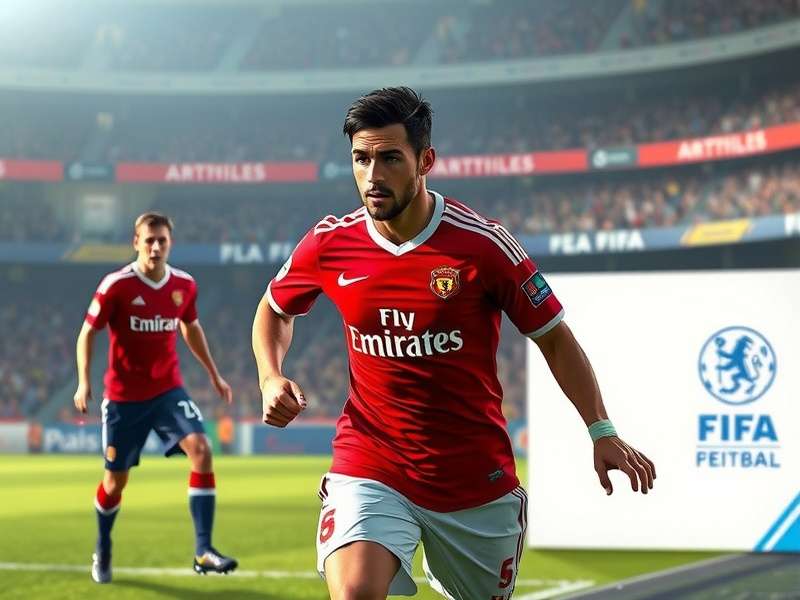
The eternal debate. Early FIFA titles leaned towards accessible, fast-paced fun. However, from the mid-2000s, a conscious shift towards authentic simulation began. Physics engines started calculating ball spin, player momentum, and even pitch wear. Yet, the brilliance of FIFA lies in its customisable "Game Styles" – from a full-blown simulation to a fast, arcade-style match, catering to the diverse preferences reflected in fan rankings.
2. The Evolution: A Historical Deep Dive 📜
Tracing the lineage of FIFA is like tracing the history of gaming technology itself. Each milestone was a leap forward.
2.1 The Genesis (1993-1997)
FIFA International Soccer (1993) on the Sega Mega Drive was revolutionary for its isometric view, breaking from the traditional side-scrolling. It featured real player names (a rarity) and the first incarnation of the iconic "tap-tap" passing system.
2.2 The Road to 3D & The Game-Changer (1998-2005)
FIFA 98: Road to World Cup introduced real-time 3D stadiums and the still-memorable "Song 2" by Blur. But the true paradigm shift was FIFA 2001's licensing of major leagues like the English Premier League, moving beyond just international and tournament play. This era solidified FIFA as the market leader.
2.3 The Next-Gen Era & Ultimate Team's Rise (2006-2019)
The move to PlayStation 3 and Xbox 360 brought graphical fidelity and new physics. The game-changer? FIFA 09 introduced Ultimate Team (FUT), a collectible card game mode that would become a cultural and financial juggernaut. This period also saw a fierce rivalry with Pro Evolution Soccer, pushing innovation in gameplay mechanics, especially in Fifa Game Free Kick systems and tactical defending.
2.4 The Modern Age: Hyper-Realism & Beyond (2020-Present)
Powered by Frostbite and technologies like Hypermotion (Xbox Series X|S, PS5), which uses machine learning and motion capture from real 11v11 matches, the game strives for unprecedented realism. Player movement, decision-making, and even on-pitch communication have reached new heights. The focus has expanded to next-level animation and contextual player intelligence.
3. Deconstructing Gameplay: Beyond Pass and Shoot 🔬
Modern FIFA's gameplay is a layered tapestry of interlocking systems.
- AI & Tactical Personality: Each team and player has a "football brain." A team like Atlético Madrid will defend deep and compact, while Manchester City engages in a high press. Star players have unique traits – De Bruyne's "Outside Foot Shot" or Mbappé's "Runs in Behind."
- The Physics Engine: It's not just about power bars. Calculations for ball aerodynamics, ground friction, and player collision physics create emergent, unscripted moments. A heavy touch on a wet pitch can be the difference between a goal and a turnover.
- Set-Piece Engineering: Free kicks and penalties are mini-games of psychology and precision. New systems allow for knuckleball effects, disguised passes, and aiming that accounts for wind and player curl stats.
4. Game Modes: More Than Just a Match 🎲
FIFA's longevity is built on its variety of play.
4.1 Career Mode: The Managerial Saga
This is the heart of the single-player experience for many. You can manage or play as a pro. Deep dives into youth academy scouting, transfer negotiation cut-scenes, and dynamic player potential make each save unique. The community constantly debates the best strategies, often shared alongside the Fifa Game Schedule of real-world football.
4.2 FIFA Ultimate Team (FUT): The Metagame Economy
FUT is a universe unto itself. It combines team building, market trading ("the transfer market"), and competitive online play. Understanding "SBCs" (Squad Building Challenges), market fluctuations during real-world matches, and the meta formations is a skill in itself. The pursuit of the perfect "Icon" card drives millions of hours of engagement.
4.3 Volta Football & Pro Clubs: The Social Experience
Volta brings back the arcade-style, small-sided street football, focusing on skill moves and flair. Pro Clubs allows 11 players to control one player each, creating unparalleled coordination challenges and camaraderie. It's football as a true team sport.
5. The Global Community & Competitive Scene 🏆
FIFA's community is its lifeblood. From content creators on YouTube dissecting the latest patch to Reddit forums debating player ratings, the conversation never stops. The eChampions League and FIFA eWorld Cup offer million-dollar prize pools, turning top players into celebrities. This community also drives the demand for resources like guides for Fifa Game Download Offline play or optimising Fcmobile.
6. The Future: Beyond EA Sports FC 🔮
With the end of the FIFA licensing partnership and the birth of EA Sports FC, a new era dawns. However, the core gameplay DNA continues. Speculation about FIFA 2026 (under new management) and beyond includes:
- Full VR Integration: Stepping onto the pitch in virtual reality.
- Advanced AI Managers: Opponents that learn and adapt to your playstyle over a season.
- Blockchain & Digital Ownership: True ownership of player cards as NFTs (a contentious but discussed topic).
- Cross-Platform Universes: Seamless progression from console to mobile and beyond.
This FIFA Wikipedia is a living document. As the game evolves, so will we. The final whistle hasn't blown.